The page nobody rereads, and every chatbot cites
Wikipedia is among the sources AI chatbots cite most. A missing, outdated or wrong page describes your company for you. How to check it, flag an error without breaking Wikipedia's rules, and why Wikidata is often the place to start.
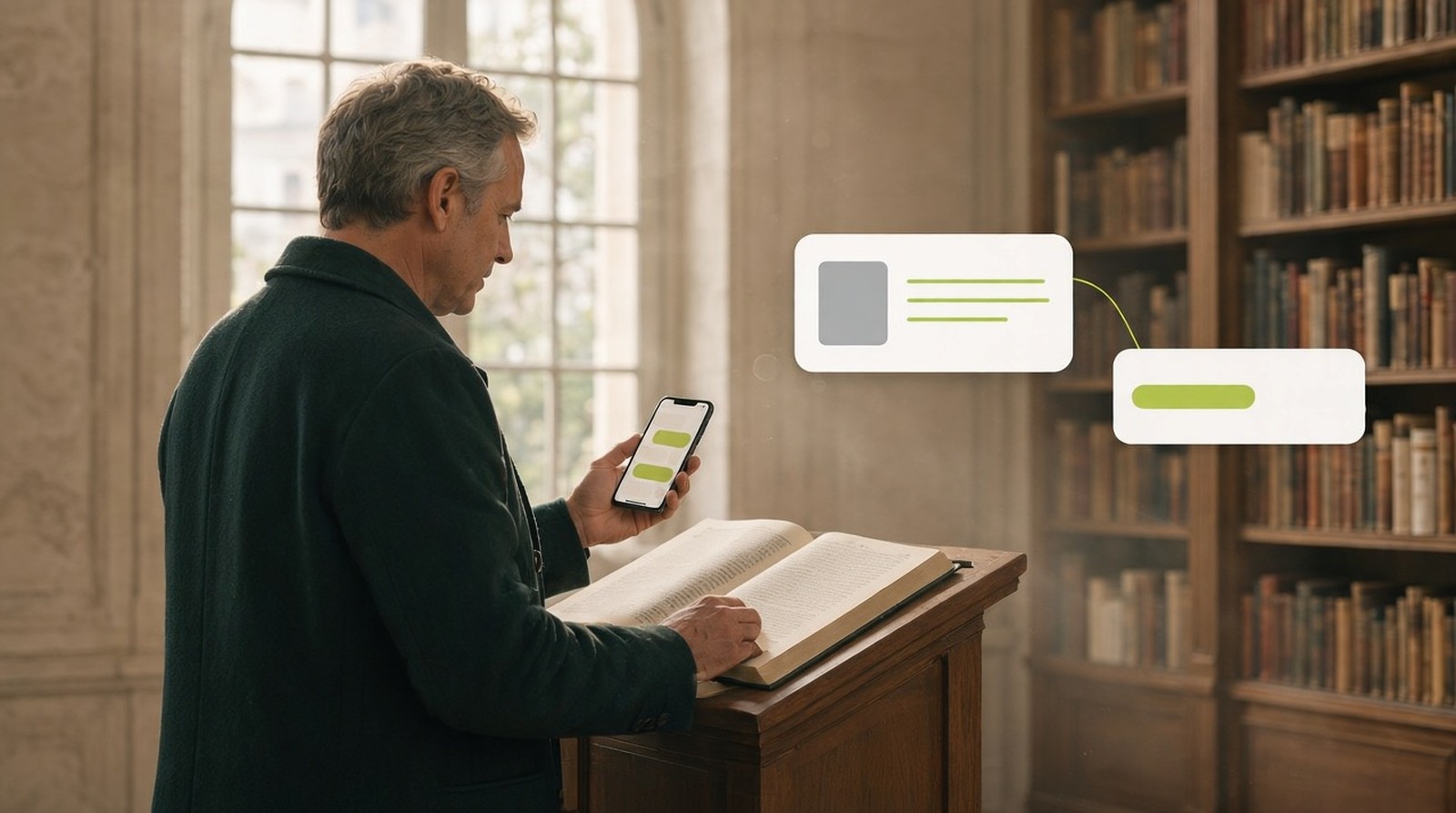
Type your company name into ChatGPT, Perplexity or Gemini, the major AI chatbots that now answer in place of a classic Google search. Very often, the first sentence of the answer relies on a source you do not control. Not your website. Not your latest press release. Wikipedia.
This reflex is not a design accident. It comes from a quality few other pages on the web have to the same degree: a neutral, structured text, regularly corrected by volunteers, with sources cited at the end of every paragraph. For a model that has to produce a reliable answer in a few seconds, it is the easiest material to work with. GEO, generative engine optimization, which aims to make a brand visible and accurately described in these chatbots' answers, almost always runs into the same reality: a free online encyclopedia that anyone can edit has ended up at the center of the system.
The detour AI answers take
Analyses of the sources cited by AI chatbots regularly put Wikipedia at the top. According to a study by Profound covering ChatGPT, Google AI Overviews and Perplexity between August 2024 and June 2025, Wikipedia accounts for 47.9% of citations among the ten sources ChatGPT cites most, ahead of Reddit and Forbes (Profound, AI Platform Citation Patterns). These shares move from one study and one month to the next, as we detailed in The French media outlets AI chatbots actually cite. The encyclopedia's central place, however, shows up in measurement after measurement.
The reason has less to do with the site's popularity than with its structure. Every page follows the same outline, every statement points to a source, every edit leaves a public trace. A model trained to spot reliable information recognizes this format immediately.
There is also a training effect. AI chatbots learned to read the web long before they could search it in real time. Wikipedia, available in full under a free license, is part of the training corpora of large language models. Your company, your products or your executives may have a line, a paragraph or a whole page there that has not changed in years. That line can weigh more in the answers than several years of press releases.
This mechanism is not limited to large companies. A small business with an accurate Wikipedia page, even a short one, has a foundation many of its competitors lack. A startup without a Wikipedia page, however active on LinkedIn or in the business press, starts with a gap at that exact spot in the answer.
A page that is missing, outdated or wrong
There are three situations, and they do not call for the same response.
The first: no Wikipedia page exists. The chatbot then falls back on other sources, often older or less reliable ones: a single press article, a LinkedIn profile, sometimes a business directory that has not been updated in a long time. The answer becomes approximate without necessarily being wrong. This is the most common situation, and the least serious.
The second: a page exists, but it is outdated. A name change, an acquisition, a change of business, a funding round: none of it has been added. The chatbot then describes a company that no longer exists in that form. This gap is typical of companies renamed after an acquisition, when the page keeps describing the former structure.
The third, and the trickiest: a page exists but contains a factual error, old or recently added by a poorly informed, or even ill-intentioned, contributor. That error does not stay on Wikipedia. It can spread into the answers of chatbots that rely on the page, stated with the same confidence as a verified fact.
| Situation | Main risk | First action |
|---|---|---|
| No page | Approximate description, weak sources | Check notability before creating anything |
| Outdated page | Stale information repeated as is | Gather recent sources and flag them on the talk page |
| Wrong page | Error repeated in AI answers | Flag the sourced error on the talk page, fix Wikidata |
Correcting a Wikipedia page without getting sanctioned
This is where many companies pick the wrong method. Editing your own page directly, or paying an agency to do it quietly, goes against Wikipedia's conflict of interest rules. The contributor community quickly spots self-interested edits, and the sanction ranges from reverting the changes to blocking the account, sometimes with a warning banner that stays visible on the page. The cure then becomes worse than the problem.
The right method is slower but sturdier. First, make sure the essential facts about the company (exact name, founding date, business, public figures, executives) exist in reliable secondary sources: press articles, official announcements picked up by media, industry publications. Wikipedia does not accept information because it is true; it accepts it because an independent source has already published it. Then, flag the error or the outdated information on the article's talk page, the space designed for this, citing those sources and disclosing your connection to the company.
For a company with no page at all, the question is not "how do we create one" but "are we notable enough". Wikipedia's notability criteria require coverage by several independent, quality sources, not passing mentions. A startup that has had a single article in the trade press will generally not qualify, and a page created too early risks deletion, which leaves a more awkward trace than the original absence.
Wikidata, the layer no one sees
There is a second, lesser-known field that is often simpler to correct: Wikidata. It is the structured database linked to Wikipedia, storing factual records such as a company's official name, sector, headquarters, executives and subsidiaries. This data feeds knowledge graphs, including Google's, which make it possible to check a fact without rereading a whole article. An accurate Wikidata record works like an ID card that automated systems can consult before they even read any text.
Wikidata also expects transparency about conflicts of interest, but its logic is different: centralizing verifiable, sourced facts rather than producing editorial text. Adding a source to a founding date or correcting an executive's name is therefore more direct. It is often the quickest starting point for a company that wants to fix wrong information repeated by AI chatbots, before tackling the Wikipedia article itself.
What Vurto measures
Neither of these efforts replaces a well-structured website, readable product pages or a solid editorial presence. But ignoring Wikipedia and Wikidata means letting the source AI chatbots cite most describe your company for you, sometimes years out of date.
Vurto asks eight AI engines the questions your customers ask and shows whether your brand is cited, in what position, against which competitors and based on which sources. You can see whether Wikipedia is among the pages feeding the answers about your brand, and read the exact content of the cited pages to spot information that no longer matches your company.