GEO y contenido en vídeo: YouTube, la nueva fuente preferida de los motores generativos
YouTube ha superado a Reddit como la plataforma social más citada por ChatGPT, Perplexity y Google AI Overviews. Un vídeo solo es citable a través de su transcripción, sus capítulos y su descripción.
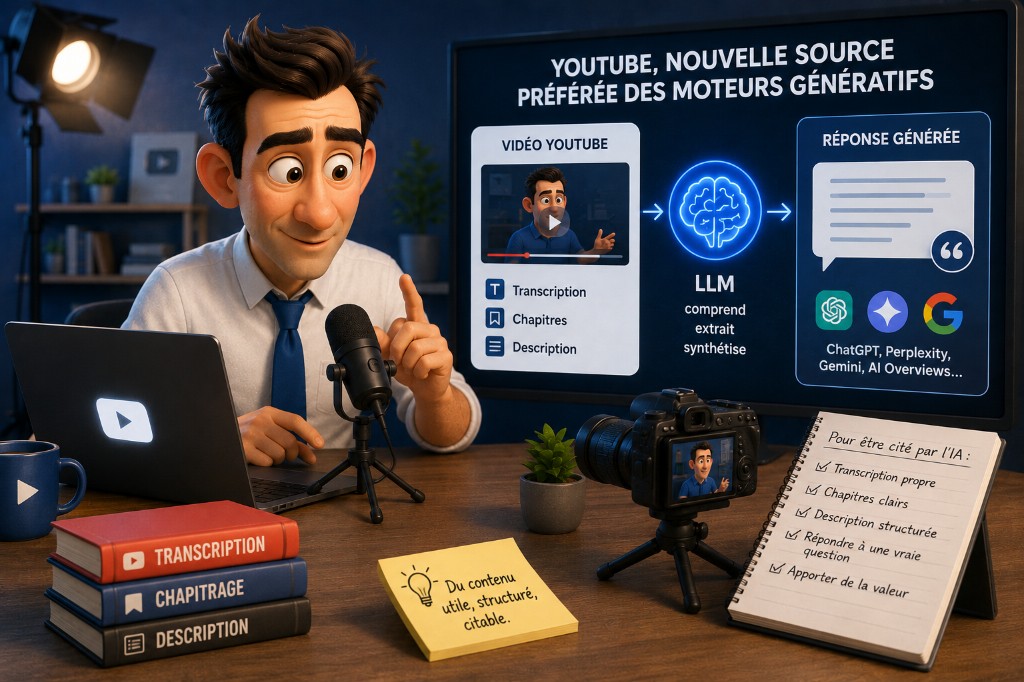
Entre agosto y diciembre de 2025, la cuota de Reddit en las citas sociales de las respuestas de IA cayó del 44,2% al 20,3%. En el mismo periodo, la de YouTube se disparó del 18,9% al 39,2%. Un estudio de Adweek publicado en enero de 2026, que cruza datos de cuatro consultoras de investigación sobre 6,1 millones de citas, confirma el cambio. YouTube ahora supera a Reddit como la plataforma social más citada por ChatGPT, Perplexity y Google AI Overviews.
El foro que había dominado las citas durante dos años acaba de perder el primer puesto. No a manos de un competidor inesperado, sino de una plataforma que la mayoría de los equipos de marketing todavía trata como un canal de distribución, nunca como una fuente de conocimiento. Ese es el primer error que hay que corregir.
Por qué un vídeo se convierte en una fuente citable
Un LLM no ve un vídeo. Lee su transcripción. Ese es el punto de partida que hay que entender antes que nada. Cuando un modelo generativo cita YouTube, en realidad está citando un texto: los subtítulos automáticos o manuales del vídeo, enriquecidos con la descripción y los metadatos de los capítulos. El vídeo en sí permanece invisible para el modelo. Su transcripción, en cambio, se convierte en un documento más dentro del corpus que consulta el LLM.
Esta mecánica explica por qué YouTube pesa tanto. Los conjuntos de datos usados para entrenar los grandes modelos, con HowTo100M y Kinetics a la cabeza, se apoyan en gran medida en transcripciones y metadatos de YouTube. Los modelos han crecido con esta plataforma como referencia. Les resulta familiar de una forma que ninguna otra plataforma de vídeo ha logrado igualar, ni TikTok, ni Vimeo, ni los vídeos alojados en el sitio de una marca.
Hay una segunda razón, más estructural. Un vídeo bien producido condensa una respuesta oral, precisa, a menudo demostrativa, a una pregunta que alguien se está haciendo de verdad. Un tutorial que muestra cómo configurar una herramienta, un experto que explica un método paso a paso, un diseñador que comenta sus decisiones en tiempo real: este formato produce un texto fuente distinto al de una entrada de blog. Más directo, más cercano al lenguaje hablado, a menudo más honesto sobre los límites y los casos particulares. Los LLM valoran este tipo de materia prima a la hora de construir una respuesta que suene creíble.
Qué hace que un vídeo sea realmente utilizable por un LLM
No todos los vídeos son iguales ante este mecanismo. Un vídeo sin una transcripción limpia, sin capítulos, con una descripción de tres palabras, sigue siendo casi invisible para un motor generativo, sea cual sea su número de visualizaciones. Tres elementos técnicos determinan la citabilidad real de un vídeo.
| Elemento | Papel en la cita de IA |
|---|---|
| Transcripción | El texto que el LLM realmente lee. Sin ella no hay cita posible, sin importar la calidad del contenido |
| Capítulos | Permiten al motor apuntar a un momento exacto en lugar de a todo el vídeo |
| Descripción estructurada | Sirve como resumen aprovechable; debe responder a la pregunta en las dos primeras frases |
La transcripción va primero porque, sin ella, nada más importa. Una transcripción autogenerada con puntuación deficiente y nombres propios mal recogidos produce un texto fuente de baja calidad que el modelo evita o distorsiona al citarlo. Una revisión humana, aunque sea rápida, cambia radicalmente la fiabilidad de esa materia prima.
Los capítulos vienen después. Un modelo capaz de señalar el minuto exacto en el que respondéis a una pregunta gana precisión en la cita, y esa precisión se convierte en un criterio de confianza. Un vídeo de doce a quince minutos dividido en cinco a siete capítulos de dos a tres minutos cada uno ofrece una granularidad que encaja bien con el nivel de detalle esperado en una respuesta generativa.
La descripción, por último, debe dejar de ser un trámite de SEO relleno de palabras clave. Funciona mejor si se trata como un artículo corto de doscientas palabras que responde directamente a la pregunta desde las primeras líneas, antes de detallar el contenido y los timestamps. Es a menudo ese texto, más que la transcripción completa, lo que los motores sintetizan primero para construir una cita breve.
Qué cambia esto para una estrategia de contenidos B2B
El error clásico es tratar YouTube como un canal social más, al mismo nivel que LinkedIn o Instagram, con un objetivo de visualizaciones y engagement. Esa lectura pasa por alto lo esencial. Hoy YouTube funciona como una base de conocimiento que los motores generativos consultan en igualdad de condiciones con un sitio web o una documentación técnica.
Para una empresa B2B, esto abre un terreno ampliamente infrautilizado. Un webinar grabado, una demo de producto comentada, una sesión de preguntas y respuestas con un cliente: son formatos que ya existen en la mayoría de los equipos de marketing, a menudo publicados sin capítulos ni descripción cuidada, a veces incluso sin subtítulos. Corregir estos tres puntos en contenido ya producido cuesta poco y convierte horas de vídeo dormido en material citable.
El cambio más rentable no consiste en producir más vídeos. Consiste en retomar lo que ya existe y hacerlo legible para un LLM. Una conferencia grabada el año pasado, un tutorial de producto interno nunca republicado, un intercambio con un cliente captado en un evento: cada pieza de ese catálogo merece una auditoría rápida antes de invertir en nuevas producciones. La ventana de competitividad sigue siendo amplia ahora mismo, ya que la mayoría de los equipos de SEO todavía trata YouTube como un canal de branding en vez de como una fuente de citas.
Las trampas que anulan el esfuerzo
Hay dos errores que se repiten más a menudo. El primero es dejar la transcripción automática tal cual en contenido técnico o con jerga del sector. YouTube transcribe mal los acrónimos, los nombres de producto, los términos especializados. Un LLM que lee una transcripción plagada de errores en vuestro propio vocabulario no puede citaros correctamente, y peor aún, puede citar una versión distorsionada de lo que dijisteis.
El segundo error consiste en tratar los capítulos como una obligación de YouTube en lugar de como una herramienta para estructurar el discurso. Los capítulos vagos, "introducción", "parte 1", "conclusión", no aportan nada. Los capítulos formulados como preguntas o afirmaciones precisas, "cómo calcular el ROI de una auditoría GEO", "los tres errores que arruinan una transcripción", dan al modelo un punto de anclaje claro para extraer una respuesta y vincularla a un timestamp exacto.
Por último, hay una trampa más silenciosa: pensar que el vídeo sustituye al contenido escrito. No lo sustituye, lo complementa. Un motor generativo construye sus respuestas a partir de un conjunto de fuentes convergentes. Un vídeo bien estructurado, un artículo que trata el mismo tema en profundidad, una ficha de producto clara: juntos, estos formatos refuerzan la misma señal de autoridad sobre un tema dado. Aislado, un vídeo perfectamente optimizado sigue siendo una fuente más entre otras, no un atajo hacia la visibilidad.
Lo que hay que recordar antes de grabar el próximo vídeo
YouTube ya no es un canal de distribución más para una marca que piensa en su visibilidad en IA. En apenas unos meses se ha convertido en la principal fuente social citada por los motores generativos, por delante de Reddit, que dominaba hasta ahora. El cambio no exige un presupuesto de producción mayor. Exige nueva disciplina en tres elementos técnicos sencillos: una transcripción limpia, capítulos precisos y una descripción que responda a la pregunta antes de describirla.
Los equipos que ajustan estos tres puntos en su catálogo existente, incluso antes de producir contenido nuevo, toman una ventaja que se acumula con el tiempo. Los que siguen tratando YouTube como un simple contador de visualizaciones dejan una parte cada vez mayor de su visibilidad en IA en manos de la competencia, o peor, de terceros que hablan de su producto sin haber sido invitados nunca.
La monitorización multi-LLM de Vurto rastrea las citas de vuestra marca en ChatGPT, Gemini, Perplexity y Claude, YouTube incluido cuando una transcripción o un comentario menciona vuestro nombre. Así podréis saber si vuestros vídeos están trabajando de verdad para vuestra visibilidad en IA, o si permanecen dormidos sin que nadie los lea.